City Bird
- Type
- Self-initiated
- Role
- UX design, UI design, research, illustration
- Platform
- Web
- Design tools
- Figma, GIMP, paper
Designing a web interaction tool to help foster a sense of sustainability and responsibility towards the environment.
In June 2025, half the trees on my street came falling down. The reason was apparently simple: the workers responsible for keeping our city clean had gone months without pay. Their solution? Cut the trees down. No trees, no leaves.
I felt helpless—not only watching the trees go down, but knowing it had taken them decades to grow. Before that day, I wouldn't have said I felt connected to those trees, but I still felt responsible for them.
I didn't know who I could report it to, or whether anyone would take me seriously. Since then, I've found myself thinking more about trees being cut down for lesser reasons, often without being replaced.
Before I could begin, I needed to understand the problem beyond my own experience. So I started with a few questions.
Who can actually do something about illegal tree felling?
The Abuja Metropolitan Management Council's Parks and Recreation department is responsible for public parks, open spaces and urban greening. But the scale of tree loss in Nigeria raised a bigger question: how effective are our existing systems at protecting them?
Do people actually care about trees?
I interviewed three people with very different relationships with trees and birds. Their responses were surprisingly different, but they shared one thing: trees mattered to them, just for very different reasons.
Bitrus saw tree felling as disrespectful to both the community and the trees. Tayo valued trees mainly for the benefits they provided—shade, fruit and comfort. Another participant depended on birds for food while also recognizing their dependence on trees.
This showed me that the challenge wasn't simply a lack of awareness. People already value trees; they just value them differently.
Synthesising the most important points and observations (using empathy maps) revealed a few common themes:
“Trees are great providers of shade, if there are no trees in an area for instance, the place in question would become a desert like in Borno…”
“The only one I feel anything for is when it’s providing a form of shade for me or in one way or the other serving me, like giving me fruits.”
“It’s not the best to cut down trees, but there are instances where I can allow it, like when someone wants to build a house.”
Which formed some key insights:
- People don’t necessarily care about trees. They care about what trees mean to them.
- “Save the trees” is more complicated than it sounds.
- The same tree can be a source of shade, food, habitat—and a problem.
- People already understand more about nature than we give them credit for.
- Maybe environmental awareness shouldn't start with “protect nature.” It should start with “look closer.”
Personas are a useful way to keep these three groups with differing needs in mind going forward:
| Bitrus | Tayo | Peter | |
|---|---|---|---|
| Primary relationship with trees | Ecological, cultural | Utilitarian, personal | Livelihood, resource |
| Values shade | ✅ | ✅ | - |
| Values fruit | ✅ | ✅ | - |
| Values birds | Generally | Conflicted | As a source of protein |
| Sees trees as bird habitat | ✅ | ✅ | ✅ |
| Objects to all tree cutting? | More Strongly | ❌ | ❌ |
| Accepts practical reasons for cutting | Somewhat | ✅ | ✅ |
| Personal experience with trees | Community, environment | Childhood, memories | Food, livelihood |
| Main tension | Conservation, ownership | Personal comfort | Conservation, livelihood |
Figuring out what to build
To define what my product should solve, I looked at the different ways people understood and interacted with trees and birds. This led me to a central problem:
We see trees. We hear birds. But we rarely understand the relationship between them—or how that relationship connects to us.
People value trees for different reasons—shade, food, beauty, culture, or memories—and can see birds as anything from beautiful wildlife to a source of food or even a nuisance.
The problem, then, isn't simply a lack of environmental knowledge. It's a lack of connection between what we see every day and the larger ecosystem it belongs to.
Learning from adjacent spaces
I couldn't identify a direct competitor offering the same experience, so I looked to adjacent spaces for inspiration.
I audited Good Fish and its VISwijzer, which turns complex sustainability information into simple insights that help people make better decisions. This showed me that ecological information doesn't have to feel complicated to be useful.
I wanted to apply the same principle to my product: make the relationships between people, species, and their environment easier to see and understand.
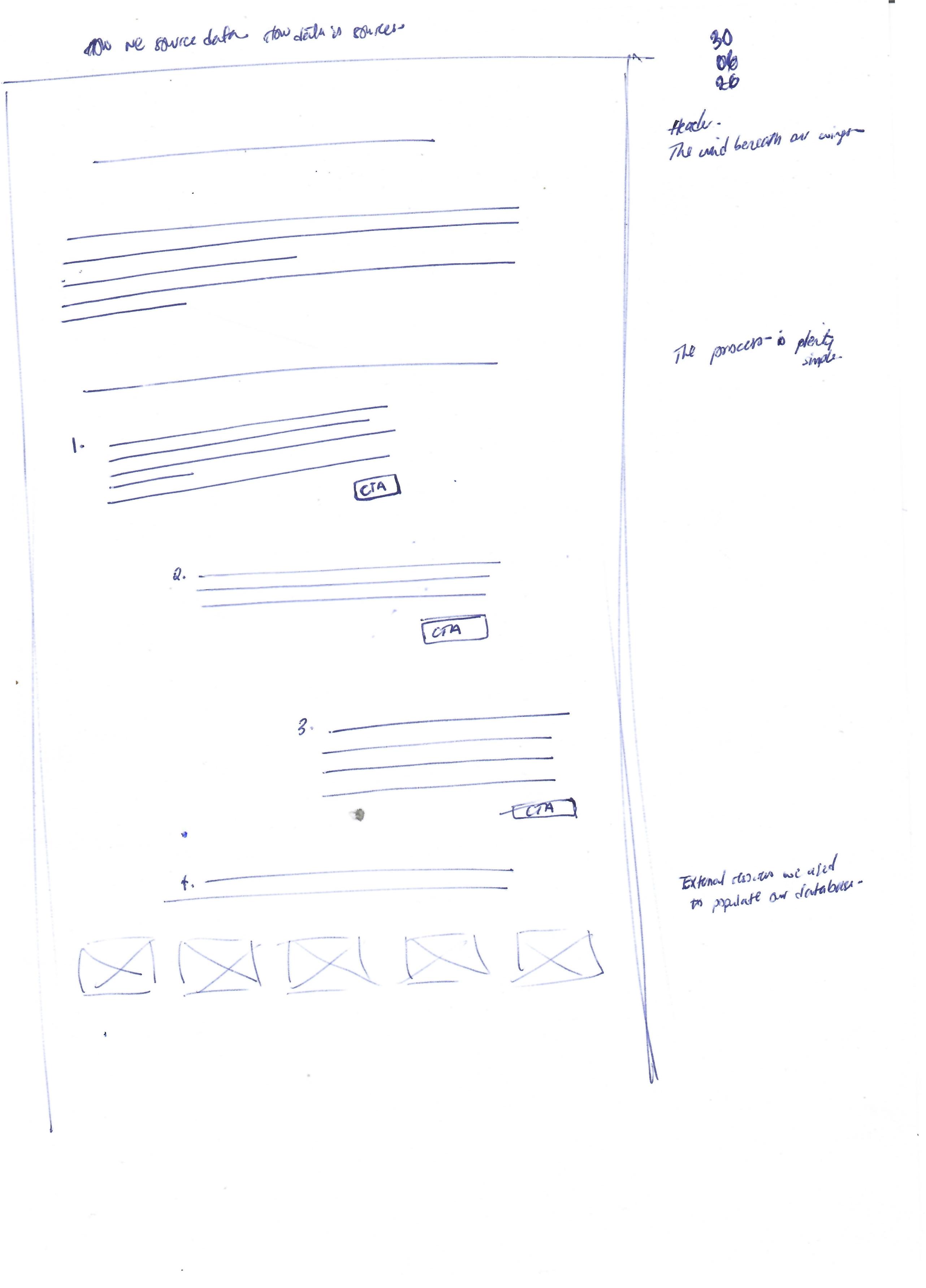
How will City Bird source this data?
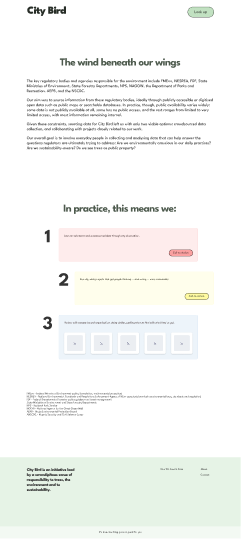
This was my first major roadblock. Finding reliable, local biodiversity data for Abuja proved difficult. While several government bodies have some responsibility for the environment, much of their data is either unavailable to the public or difficult to access.
This meant City Bird couldn't rely entirely on existing government datasets. I looked instead at how projects in adjacent spaces source and present environmental data, including Good Fish, Trees for the Future, eBird, and the Nigeria Bird Atlas Project.
The research showed that a combination of first-party data, partnerships, and citizen observations could provide a more practical approach.
Potential data sources
- Citizen science — Users contribute observations of trees and birds around them.
- First-party data — Data generated through users' interactions with City Bird.
- Direct research and surveys — Collecting information from local communities and organisations.
- Partnerships — Working with organisations such as the Nigeria Bird Atlas Project and local bird clubs to validate and enrich the data.
This approach would allow City Bird to start locally and build its own environmental dataset over time, rather than waiting for a single institution to provide all the information it needs.
Scope and Structure
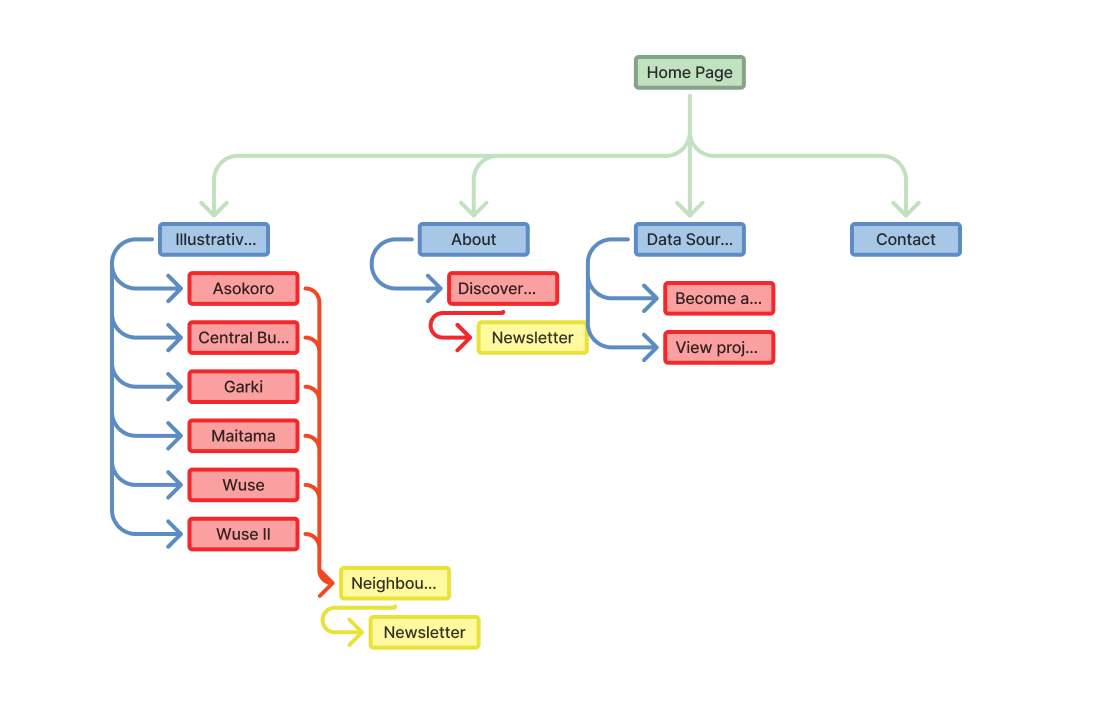
I limited the initial scope to a website, while keeping the designs realistic enough to account for development constraints, complex data relationships, edge cases, and business needs alongside user needs.
Goal statement
The website and app will make disconnected ecological information visually engaging and easier to understand. Effectiveness will be measured through usability testing of the high-fidelity designs.
Generating ideas
I started with a simple question:
How might I represent complex ecological information in a way that feels simple and human?
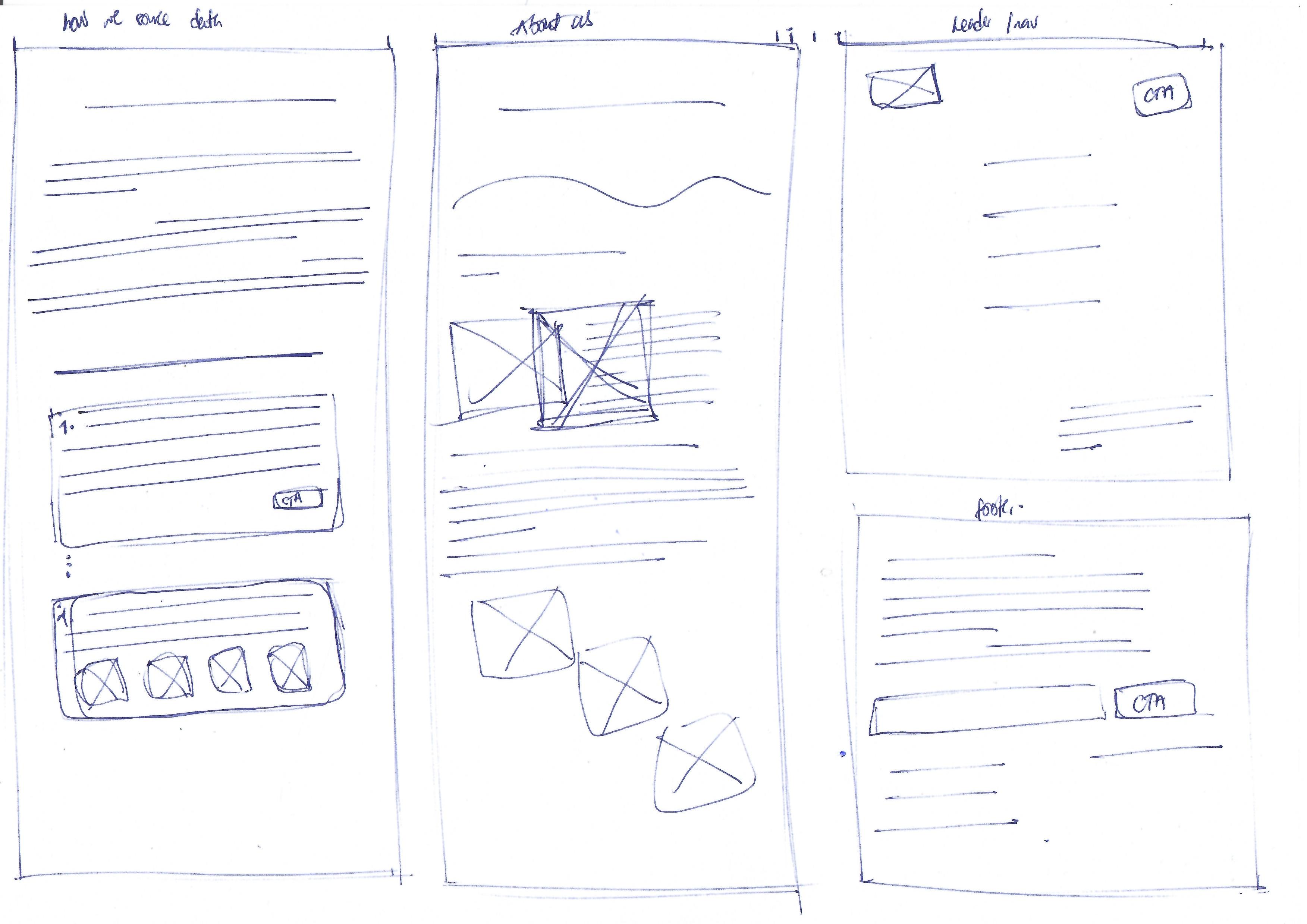
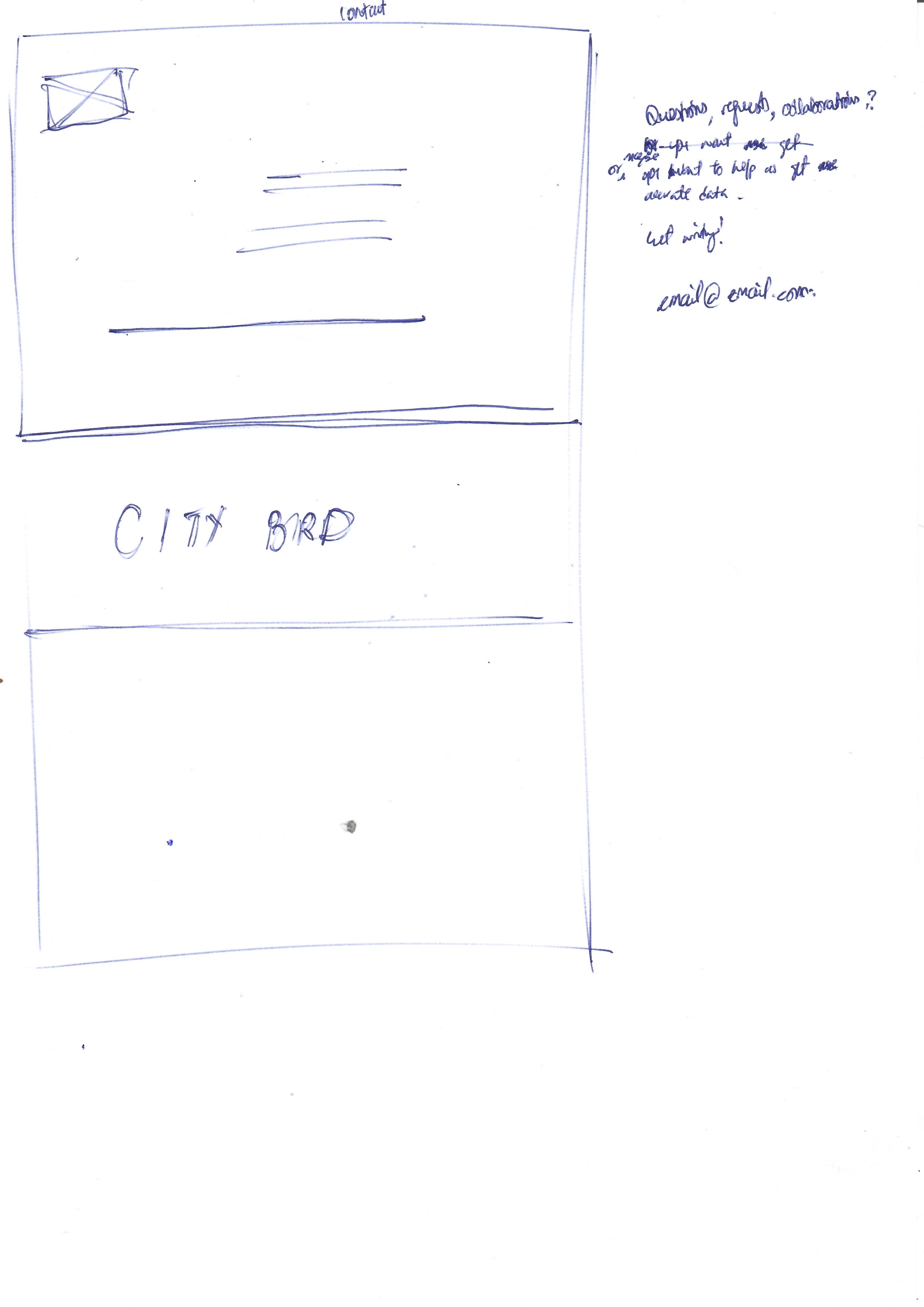
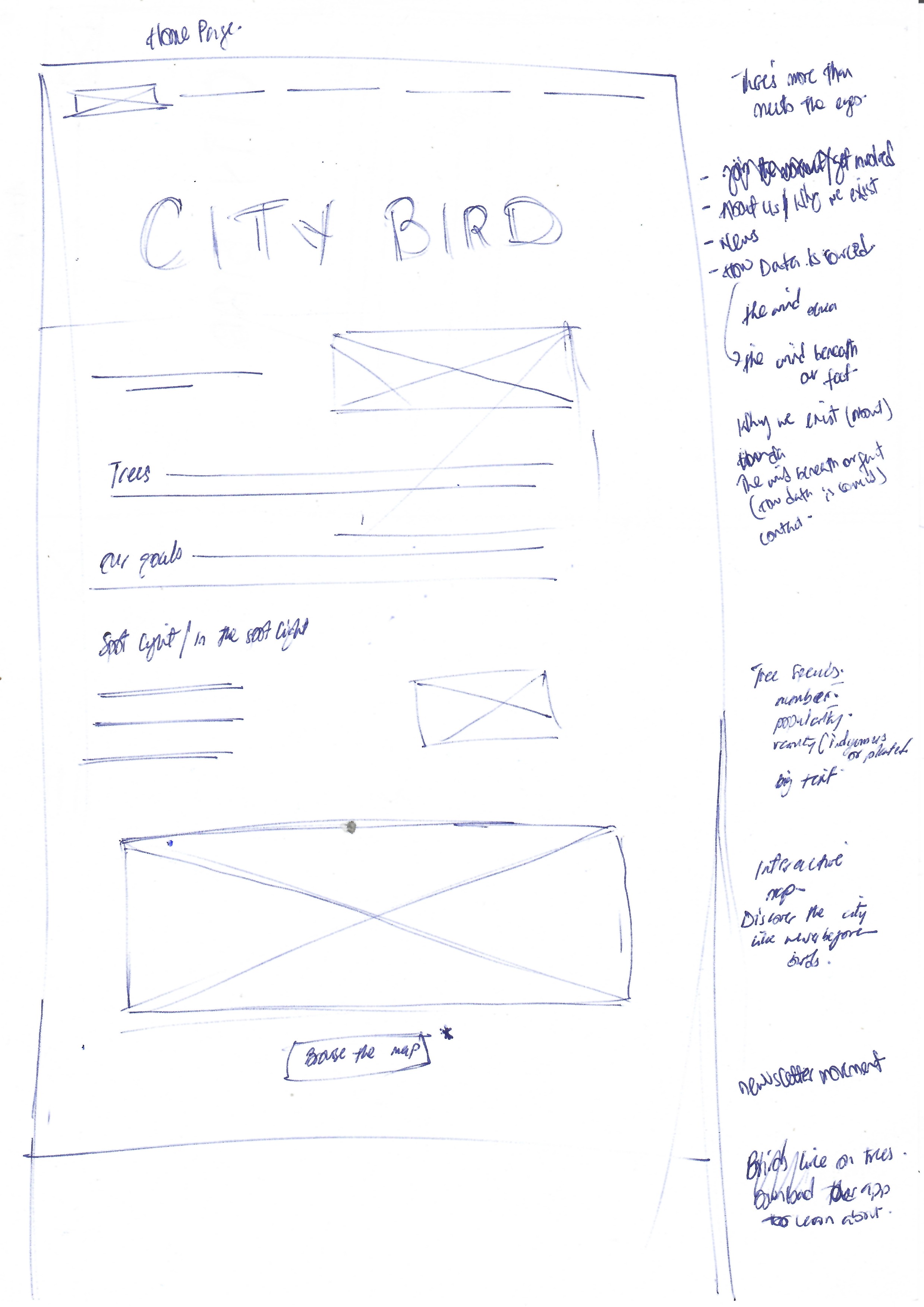
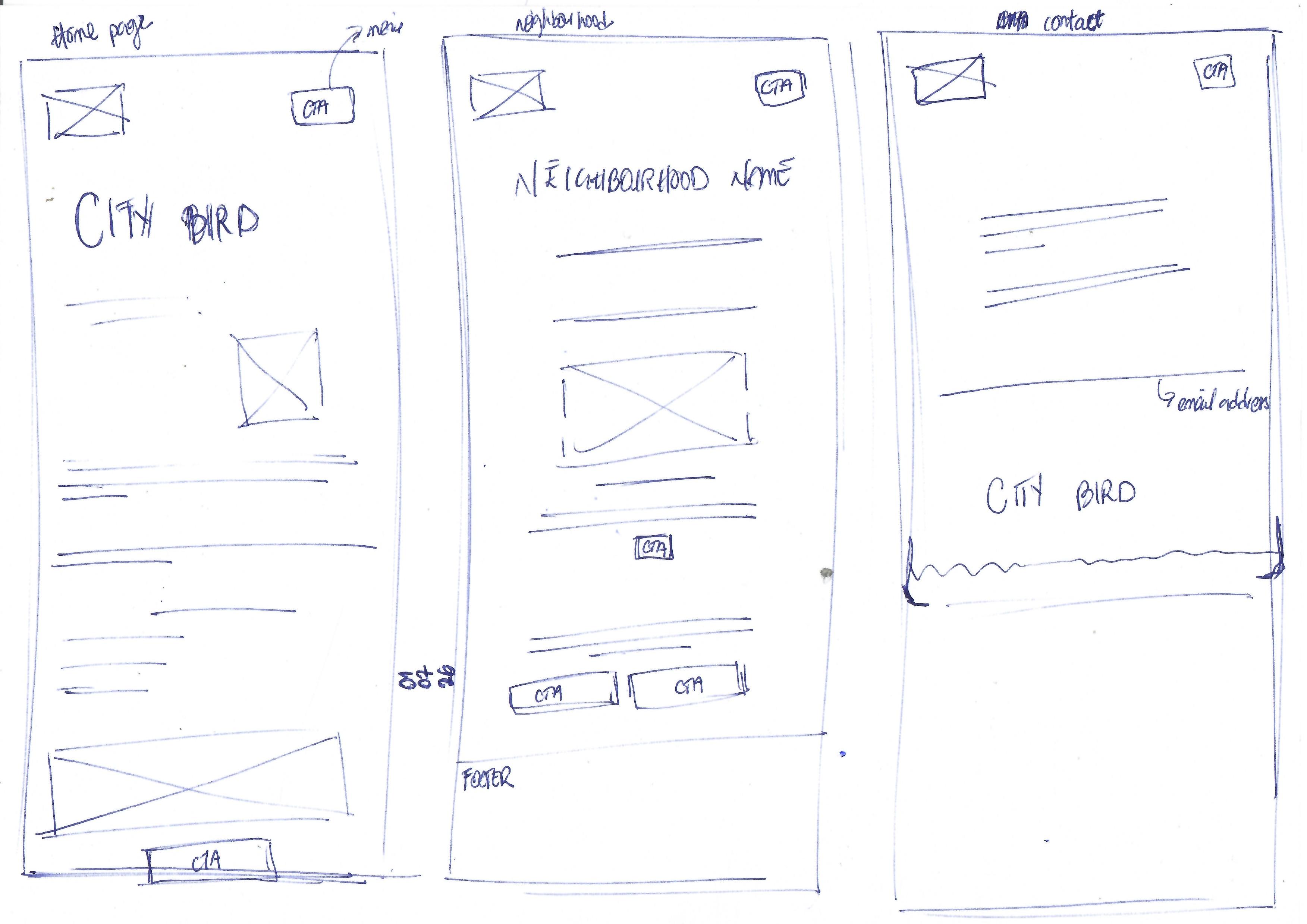
I wanted City Bird to have a personality of its own, so I started loosely, exploring different ways information could be experienced rather than simply read.
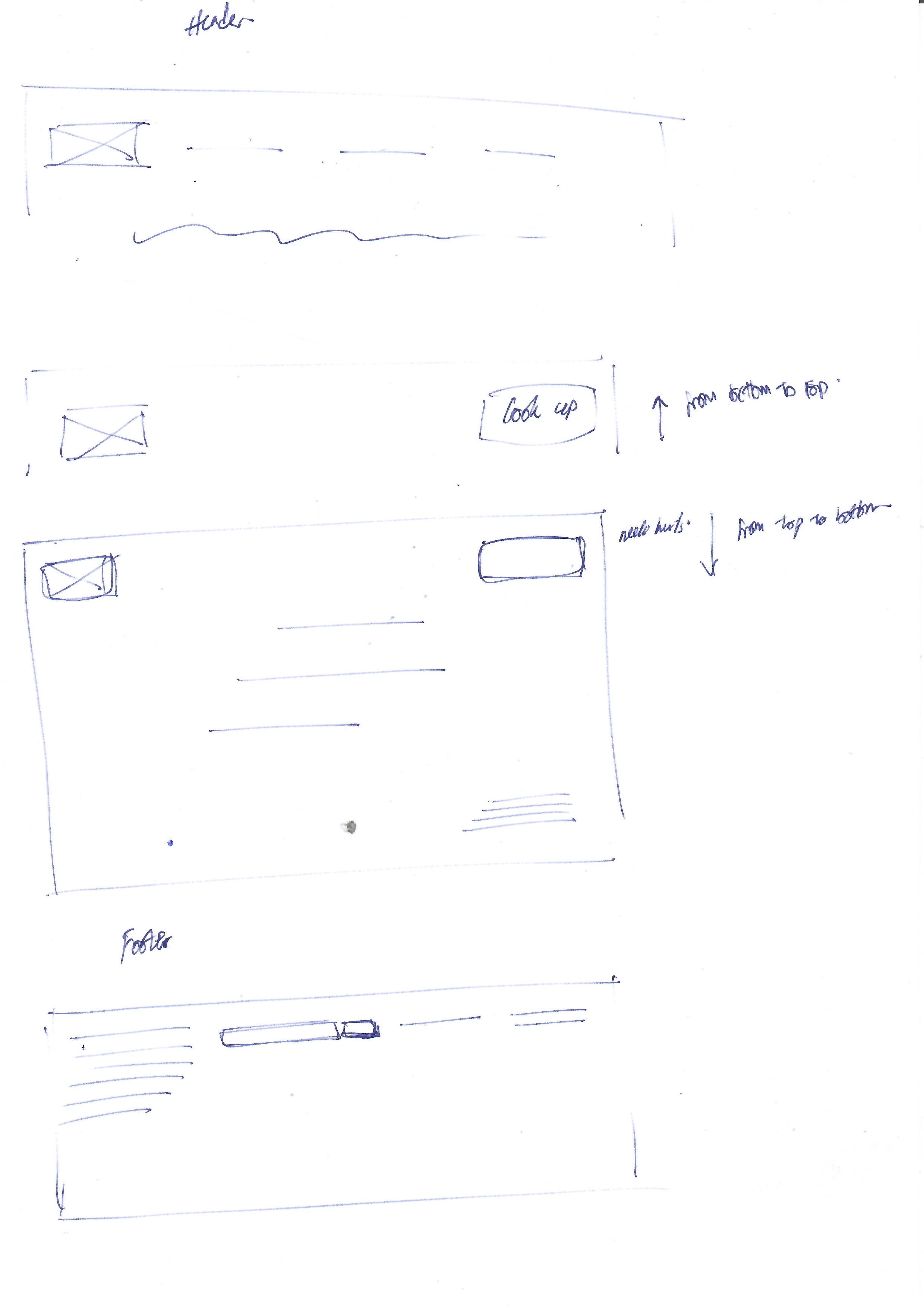
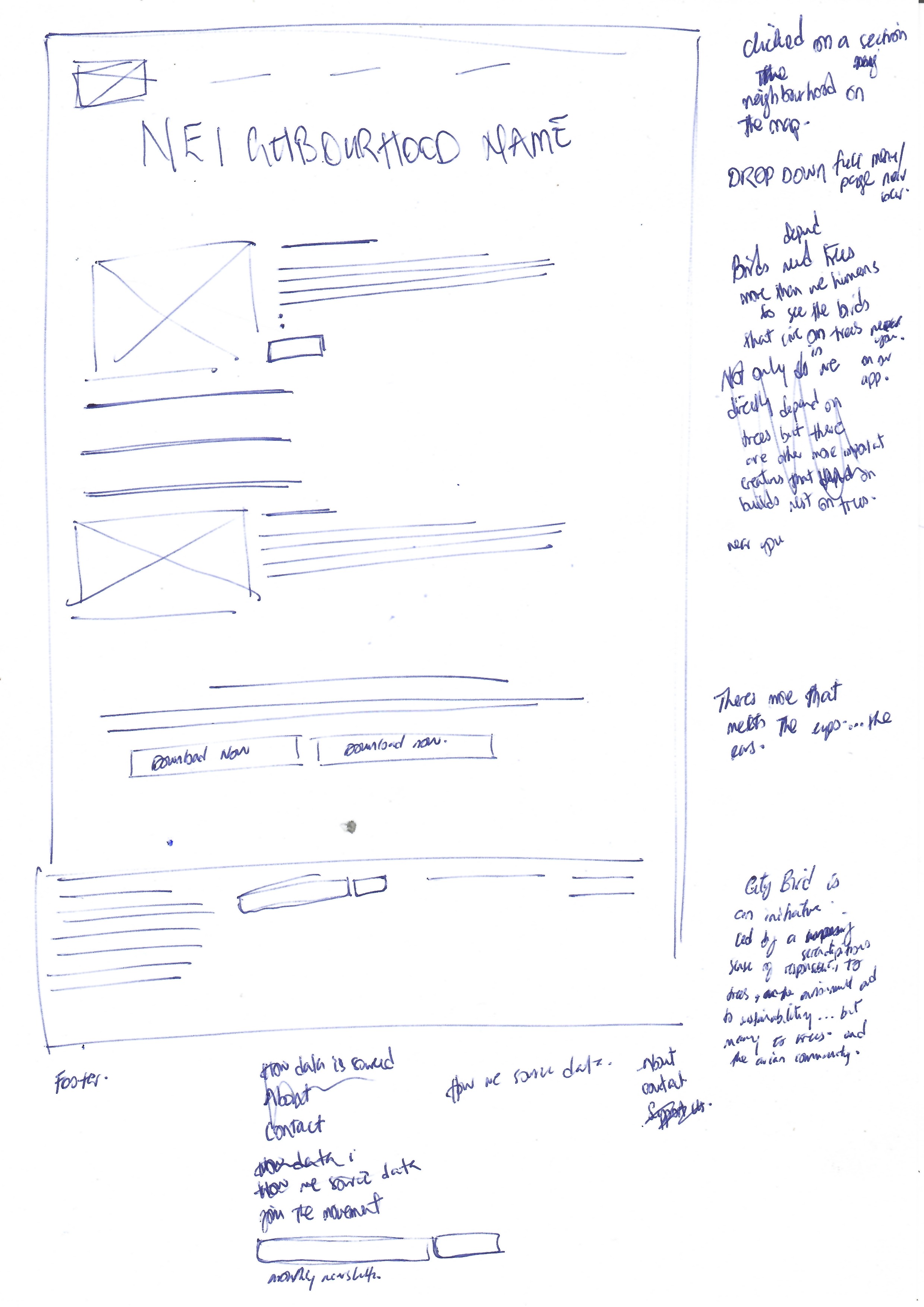
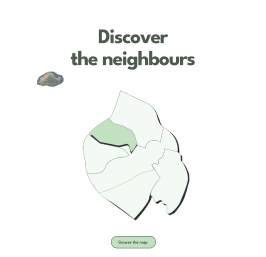
Some early ideas included using a map to help Tayo identify the trees around his home and discover the birds that depend on them, or guiding users through their neighbourhood to understand the trees growing around them and their wider ecological significance.
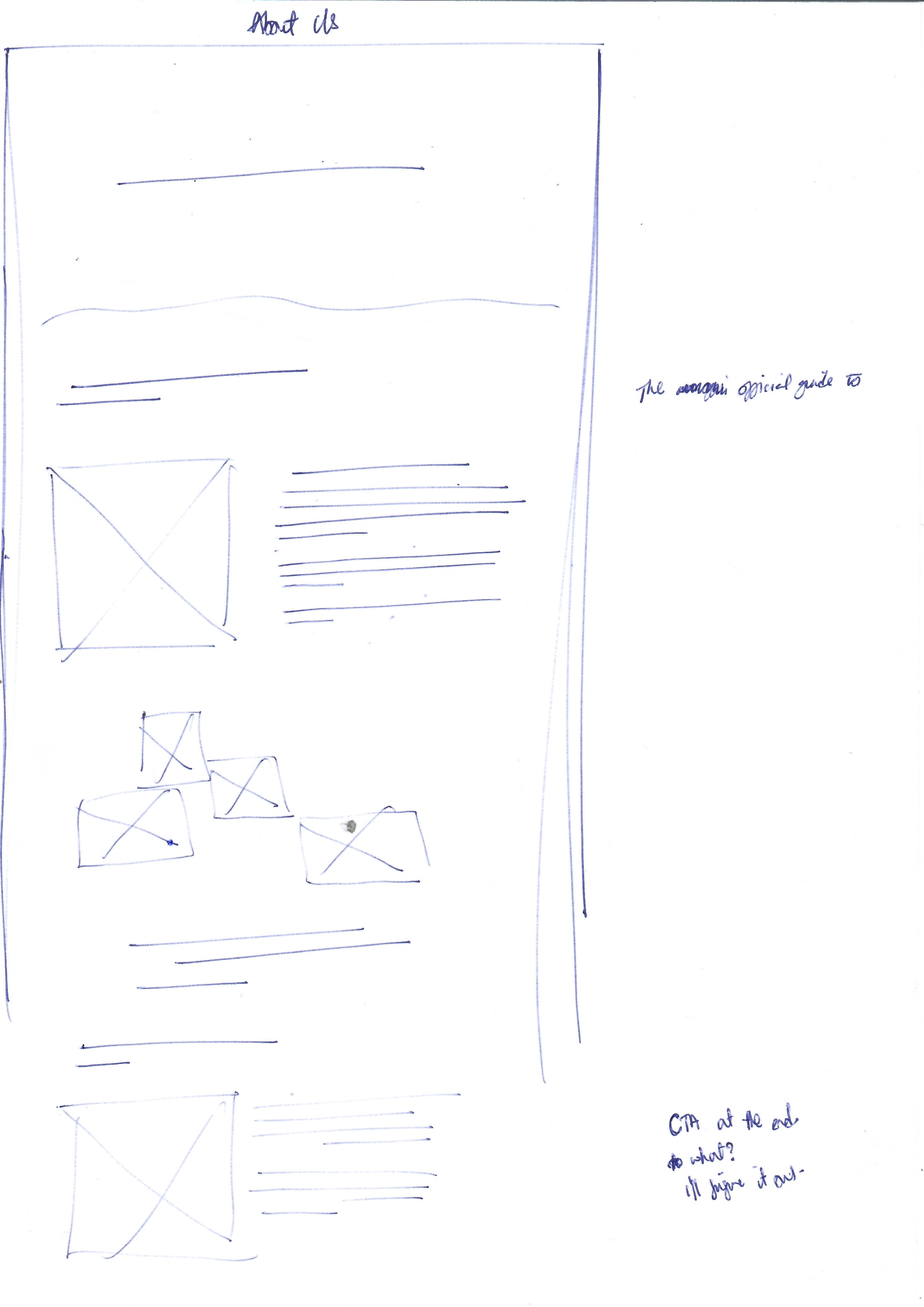
These explorations led to the primary flow: help users discover the trees around them, then reveal the relationships and ecological value connected to them.
Visual Design
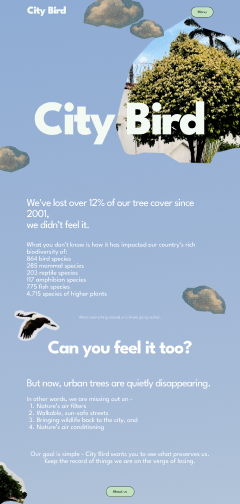
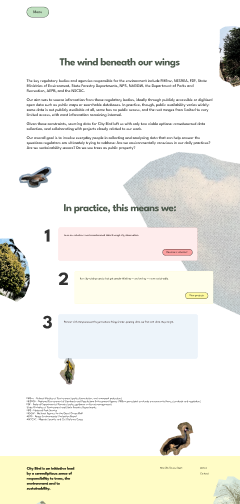
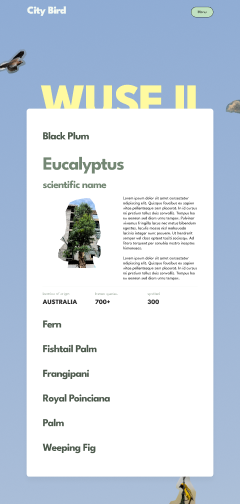
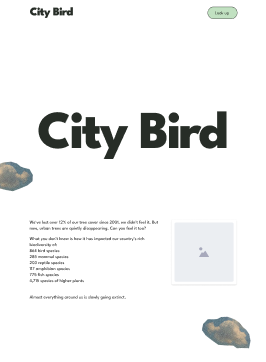
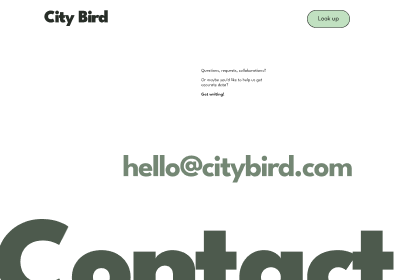
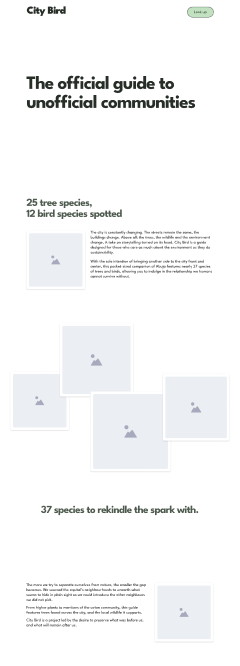
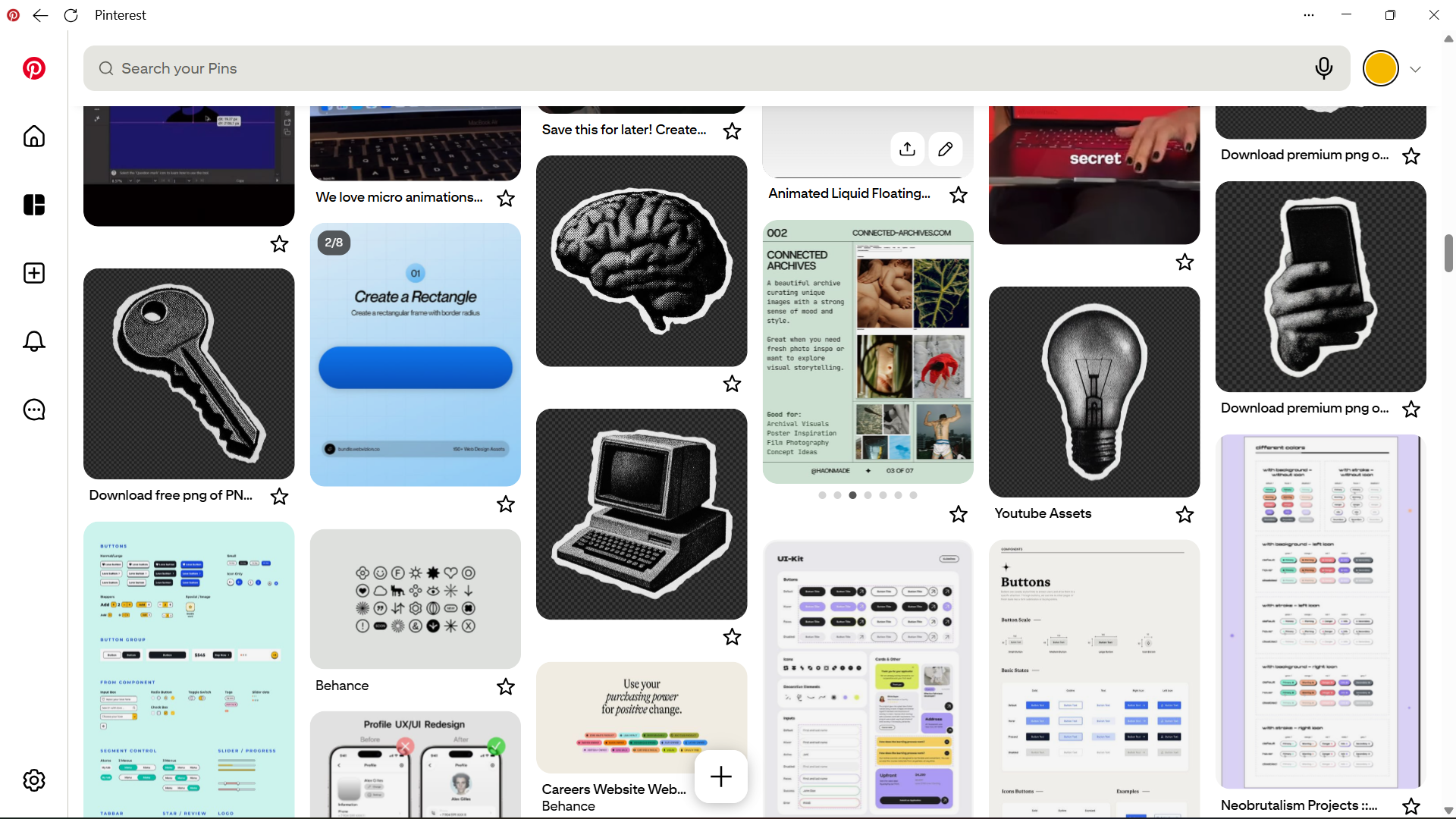
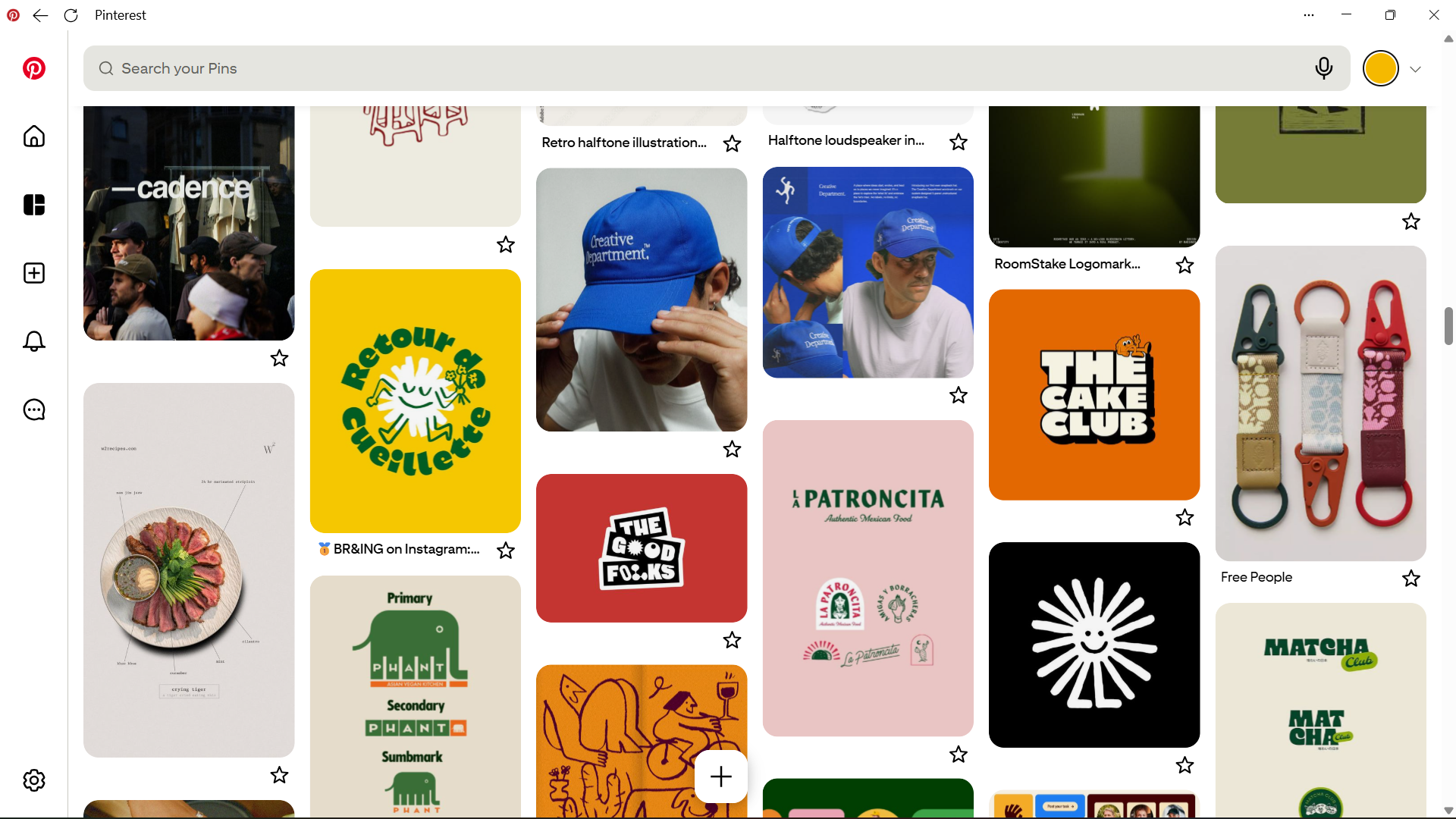
I began the visual design by collecting references and exploring how the brand could reflect City Bird's focus on nature, sustainability, and preservation. I wanted the product to have a personality of its own, which led me towards a bright, nature-inspired palette and a visual language influenced by recycled materials.
Breaking down some visual choices
Colour — A bright palette inspired by nature, with text colours chosen for readability and contrast.
Typography — I chose League Spartan as the sole typeface. Its bold character felt better aligned with the personality I wanted for the brand.
Illustration — I created the birds and trees with a paper-cut aesthetic to reinforce the recycled, tactile direction. These illustrations became a central part of the visual identity.
Components & grid — An 8pt grid, reusable components, and defined styles provided consistency while keeping the interface flexible to develop.
Finished Product
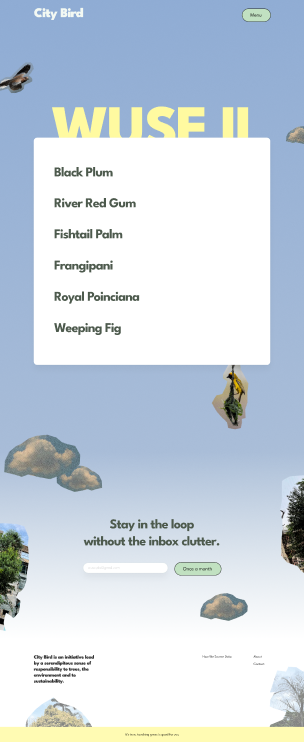
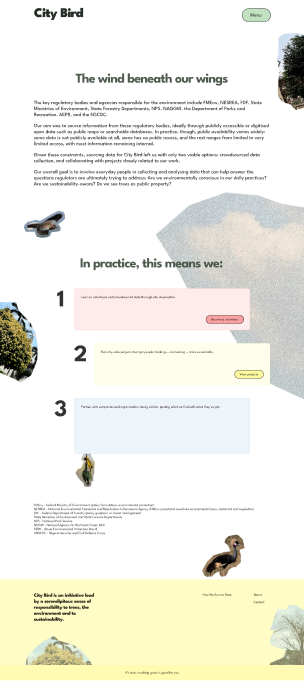
Taking a look at the full primary flow
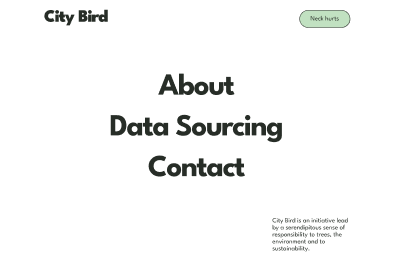
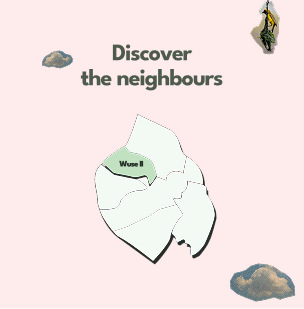
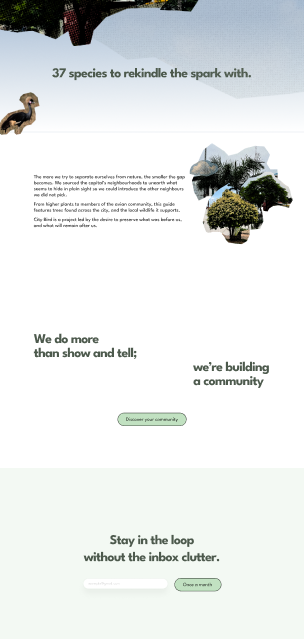
This is the core experience of the website. Users enter a focused exploration of their neighbourhood, discovering the natural environment around them from a different perspective.
In conclusion
At this stage, I’m confident the product is ready to move into development. The research and design process helped me move beyond simply identifying trees and birds to thinking about how people actually relate to the natural environment around them.
The next phase could introduce a community contribution layer, allowing users to document the trees and birds they encounter, report changes in their environment, and contribute observations over time. These individual contributions could eventually form a living, community-generated record of the city's natural environment.
This could take City Bird beyond an awareness tool. As the dataset grows, it could become useful to schools, environmental organisations, researchers, local communities, and others interested in understanding and protecting urban biodiversity.
There are still questions to explore around data accuracy, participation, moderation, and how the information could create value for different stakeholders. But that is what makes the next phase exciting.
The goal was never to create another database of trees and birds. It was to help people pay closer attention to the living environment they are already a part of—and eventually give them a way to participate in documenting its story.